How Transcripts Enhance Fan Engagement and Understanding
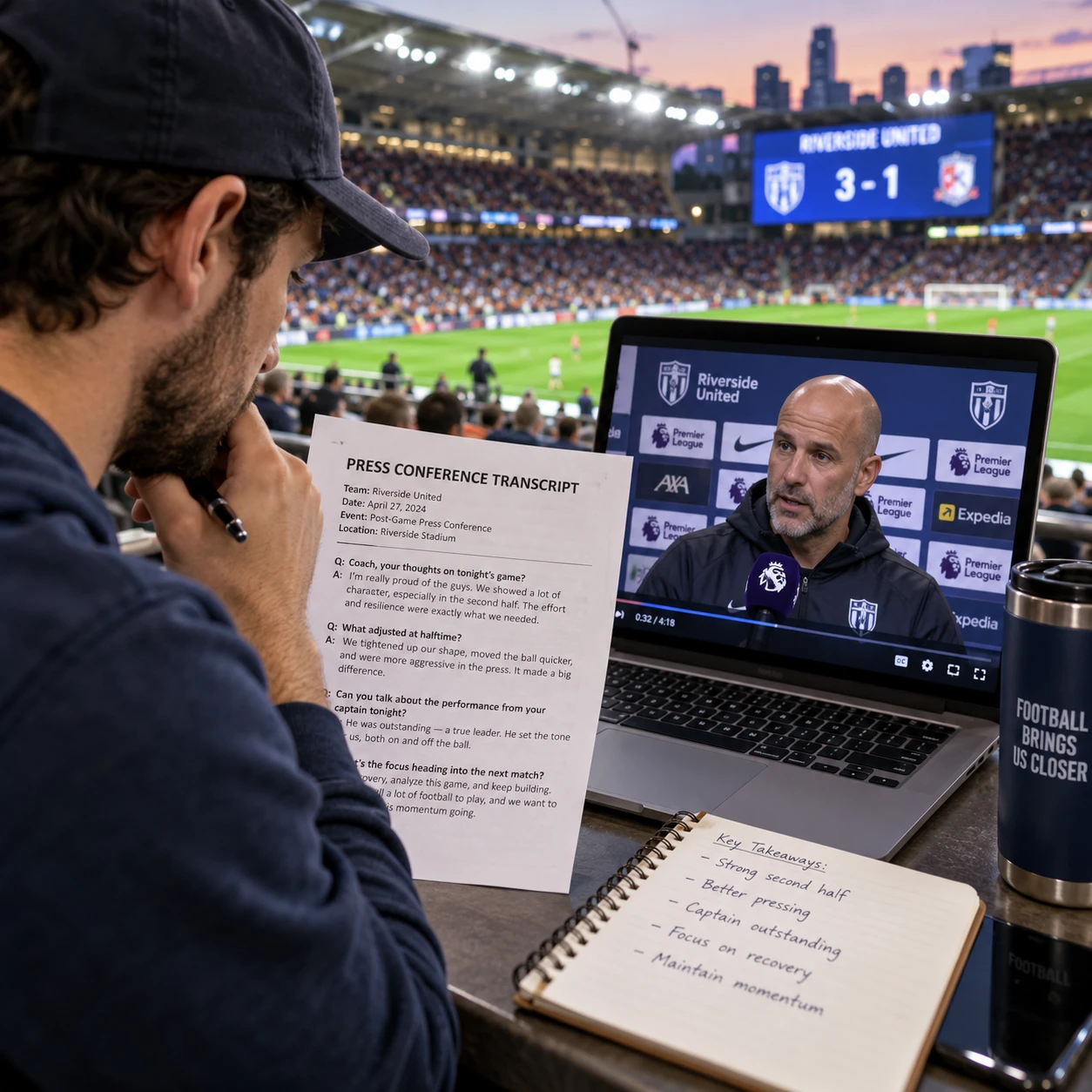
A final score tells fans who won, but it cannot explain every decision, adjustment, or turning point. Sports press transcripts preserve what players and coaches say after a game, giving fans a reliable written record they can revisit alongside live coverage, highlights, and analysis.
Whether a supporter missed a press conference or wants to check the exact wording of a key comment, transcripts make sports coverage easier to follow. They help connect the events on the field with the thinking and reactions behind them.
What Sports Press Transcripts Include
Sports press transcripts are written records of spoken remarks from interviews, press conferences, and other media availabilities. They typically capture post-game comments from players and coaches, along with questions from reporters when those are part of the record.
A transcript may cover a brief post-game interview, a full post-match press conference, or a media session before a major game. Depending on the source, it can include speaker names, questions, answers, and notes that clarify who is speaking. That attribution matters: a coach’s explanation of a tactical change should not be mistaken for a player’s view of the same moment.
Some records focus on the most newsworthy quotes, while others provide a fuller account of the exchange. Fans should check whether a page presents a complete transcript or selected excerpts. A shortened version can be useful for quick reading, but it may leave out the question or qualification that gives a quote its meaning.
- Post-game interviews: Immediate reactions, individual performances, and first impressions of the result.
- Press conferences: Longer exchanges about strategy, injuries, substitutions, officiating, and the wider season.
- Other remarks: Pre-game media sessions or comments after training, depending on the team and publisher.
Helping Fans Understand the Story Behind the Score
Comments from players and coaches help fans understand the game context behind a score. They can explain why a team changed its approach, how an athlete saw a key play, or what influenced a decision that was not obvious from the broadcast.
Imagine a basketball team trailing at halftime, then switching to a zone defense. Highlights may show the change, but a coach’s press conference answer can explain that the switch was meant to protect a player in foul trouble. That detail helps fans connect the tactical decision to the game situation rather than treating it as an unexplained adjustment.
Players’ perspectives add another layer. An athlete might describe how a defender’s positioning affected a shot, or why a team kept pressing late in a match. These comments do not settle every debate, and a post-game explanation may reflect a speaker’s viewpoint rather than a complete account. Still, when read beside game footage and statistics, remarks can fill gaps and sharpen sports analysis.
Context is the key: a quote is most useful when fans know who said it, what question prompted it, and when it was made. A remark immediately after a close loss may sound different from the same player’s considered assessment a day later.
Making Sports Coverage Easier to Follow
Readable, searchable transcripts let fans find and revisit specific remarks at their own pace. Instead of replaying an entire interview, a reader can scan for a player’s name, a tactical term, or a question about a decisive moment.
This is especially helpful when a press conference runs long or a fan follows several teams. A written record makes it easier to compare what a coach said after two different games, check whether an injury update changed, or return to a quote during a later discussion. Searchability turns a one-time media moment into a reference fans can use when the season moves on.
Transcripts also suit different routines. A fan might read during a commute, after work, or while checking the box score. Text is often quicker to scan than video, though it cannot convey every pause, tone, or expression. For a sensitive answer or a disputed quote, the recording may provide useful information that plain text cannot.
To locate a remark efficiently, search for a distinctive phrase or speaker, then read the surrounding exchange. A single keyword can surface the right section, but the question and nearby answers show whether the quote was conditional, humorous, or part of a longer explanation.
Supporting Deeper Fan Engagement
Sports press transcripts give fans material for more informed discussion and analysis. They preserve quotes and commentary that supporters can revisit, compare, and discuss with other fans.
For example, fans debating a late substitution can use a coach’s explanation to test their own reading of the decision. Supporters following a player’s development can compare comments across the season and notice how the athlete describes a changing role. These records can also help fan communities separate a verified statement from a paraphrase circulating on social media.
That does not mean a transcript proves a decision was right or makes every interpretation objective. Coaches and players have limited information, personal perspectives, and sometimes careful reasons for choosing their words. The transcript offers evidence of what was said; fans still need to weigh it against the game, available statistics, and other reporting.
A useful discussion habit is to cite the speaker and the full point, not just the most dramatic sentence. That approach keeps debate focused on the actual comment and reduces the risk of turning a qualified answer into a sweeping claim.
Improving Access to Interviews
Written transcripts make sports interviews available in a format that complements audio and video. They can help fans who are deaf or hard of hearing, people who prefer reading, and anyone who cannot conveniently play sound or watch a recording.
Text can also help readers who process information better at their own pace. They can pause, reread a complicated answer, or search for a name without relying on playback controls. For fans following a game in a second language, a written version may offer time to check unfamiliar terms, although a transcript in one language does not automatically provide a translation.
Accessibility depends on quality. Clear speaker labels, readable formatting, and accurate wording make a transcript easier to use. Errors can obscure meaning, particularly with names, team terminology, or quick exchanges. When accuracy is important, compare a disputed passage with the original recording if one is available.
Transcripts do not replace video for viewers who want to see gestures, demonstrations, or facial expressions. They work best as another route into the same interview, allowing fans to choose the format that fits their needs and circumstances.
Getting the Most from a Transcript
To get the most from a sports transcript, identify the speaker and event, read the full exchange around a quote, and compare key remarks with game footage or other coverage. This simple process helps preserve meaning while making the record easier to use.
- Check the source and date. Confirm which game or media session the transcript covers, and whether it is complete or excerpted.
- Read the question as well as the answer. A response about an injury, substitution, or officiating decision may depend on exactly what a reporter asked.
- Keep the game context in view. Link remarks to the score, timing, lineup, and events on the field or court.
- Verify important wording. If a quote seems surprising or controversial, check the surrounding passage and consult the audio or video when available.
- Use transcripts with other coverage. Highlights show what happened; interviews explain how participants describe it. Statistics and reporting can add further context.
A transcript is a record of remarks, not a complete substitute for watching or attending sports. Its value comes from being a dependable companion to the game: easy to search, practical to revisit, and useful for grounded discussion. Read carefully, and it can help fans understand not only the result but also the perspectives surrounding it.