Behind the Scenes: How Sports Press Conference Transcriptions Actually Get Made
Every time a coach walks off the field and into a room full of reporters, a clock starts ticking. By the time the questions end and the door closes, a transcription team is already working. What happens between that moment and the published text on a media outlet's website is a surprisingly involved process — one that blends technology, editorial judgment, and real deadline pressure.
Why Accurate Press Conference Transcripts Matter in Sports Media
Accurate press conference transcription is the backbone of sports media coverage. Journalists rely on verbatim records to quote coaches and athletes correctly; fans and analysts use transcripts to catch details they missed during live broadcasts; and media outlets depend on them to build searchable, authoritative archives.
A single misquoted word can shift the meaning of a statement entirely. In a post-game press conference, a coach saying "we need to fix our defense" reads very differently from "we want to fix our defense." That distinction matters — to the locker room, to the front office, and to every reporter filing a story that night.
Beyond accuracy, transcripts serve a practical SEO function. When published correctly, they drive organic traffic from fans searching for what a player or manager said after a big match. That makes transcript quality a business concern, not just an editorial one.
Step 1 — Capturing the Audio (and Why Quality Starts Here)
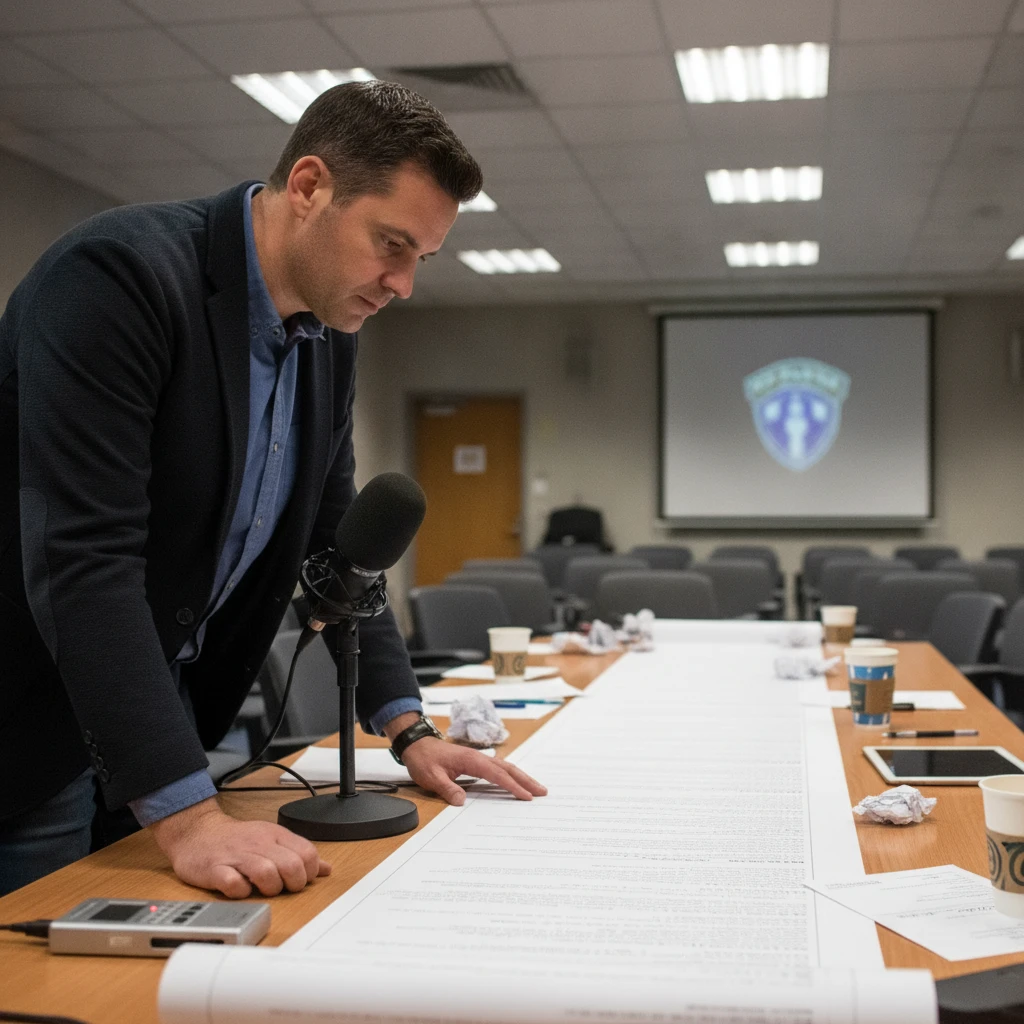
The quality of a press conference transcription is determined largely before anyone types a single word. Audio capture quality is the single biggest variable in the entire workflow — and it is often the least controlled.
Professional setups use a dedicated room microphone or a multi-channel recording rig that isolates the primary speaker from ambient noise. In practice, though, sports venues are rarely ideal recording environments. HVAC systems hum in the background. Reporters ask questions from across a crowded room without microphones. Multiple voices overlap during heated exchanges.
Experienced transcription teams always request the best available audio source — usually a direct feed from the venue's PA system or a dedicated recorder placed close to the podium, rather than a camera's built-in microphone. When audio is captured from a video feed, the transcriptionist is often working with compressed audio that loses consonants and softens sibilants, making names and numbers harder to distinguish.
The takeaway: investing in decent recording equipment upstream saves significant time and error-correction effort downstream.
Step 2 — Choosing Between Human Transcriptionists and AI Tools
The choice between a human transcriptionist and AI transcription software comes down to a trade-off between speed and accuracy, particularly in noisy, multi-speaker environments. Neither option is universally better — the right choice depends on the specific context.
AI speech-to-text tools have improved dramatically over the past few years. For clean, single-speaker audio in a quiet room, modern automated tools can produce a usable first draft in minutes. That speed is genuinely valuable when a transcript needs to be live within 30 minutes of a press conference ending.
The problem is that sports press conferences rarely offer clean audio. Reporter questions from the back of a room, accented speech from international athletes, and the specific vocabulary of a given sport — tactical formations, player nicknames, stadium names — all create gaps that automated tools consistently mishandle. A tool that transcribes general English well may produce gibberish when a manager discusses a "gegenpressing" system or a player references a specific play.
Human transcriptionists bring contextual knowledge that no current AI replicates reliably. An experienced sports media transcriptionist recognizes that "Salah" is not "solar," and that "VAR decision" is not "far decision." That domain expertise is the difference between a transcript that needs 20 minutes of corrections and one that is publication-ready.
Many professional workflows now use a hybrid approach: AI generates a rough draft, and a human editor cleans it up. This can reduce total turnaround time by 40–60% compared to manual transcription from scratch, while still catching the errors that pure automation misses.
Step 3 — Formatting for Clarity: Speaker Labels, Timestamps, and Style
Raw transcription output — whether from a human or an AI tool — is not a finished product. Formatting transforms a wall of text into a readable, navigable document. The key elements are speaker labeling, timestamps, and adherence to an editorial style guide.
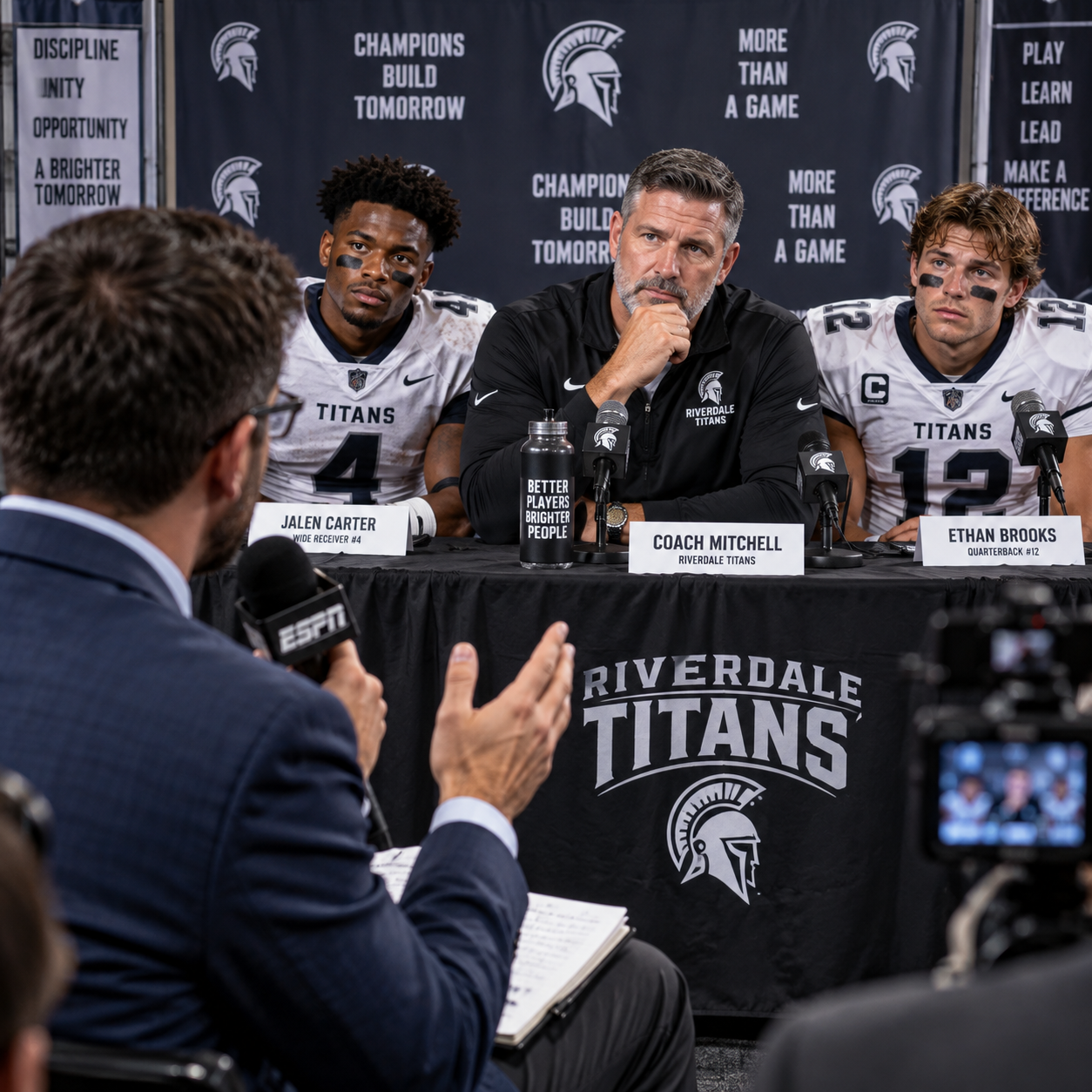
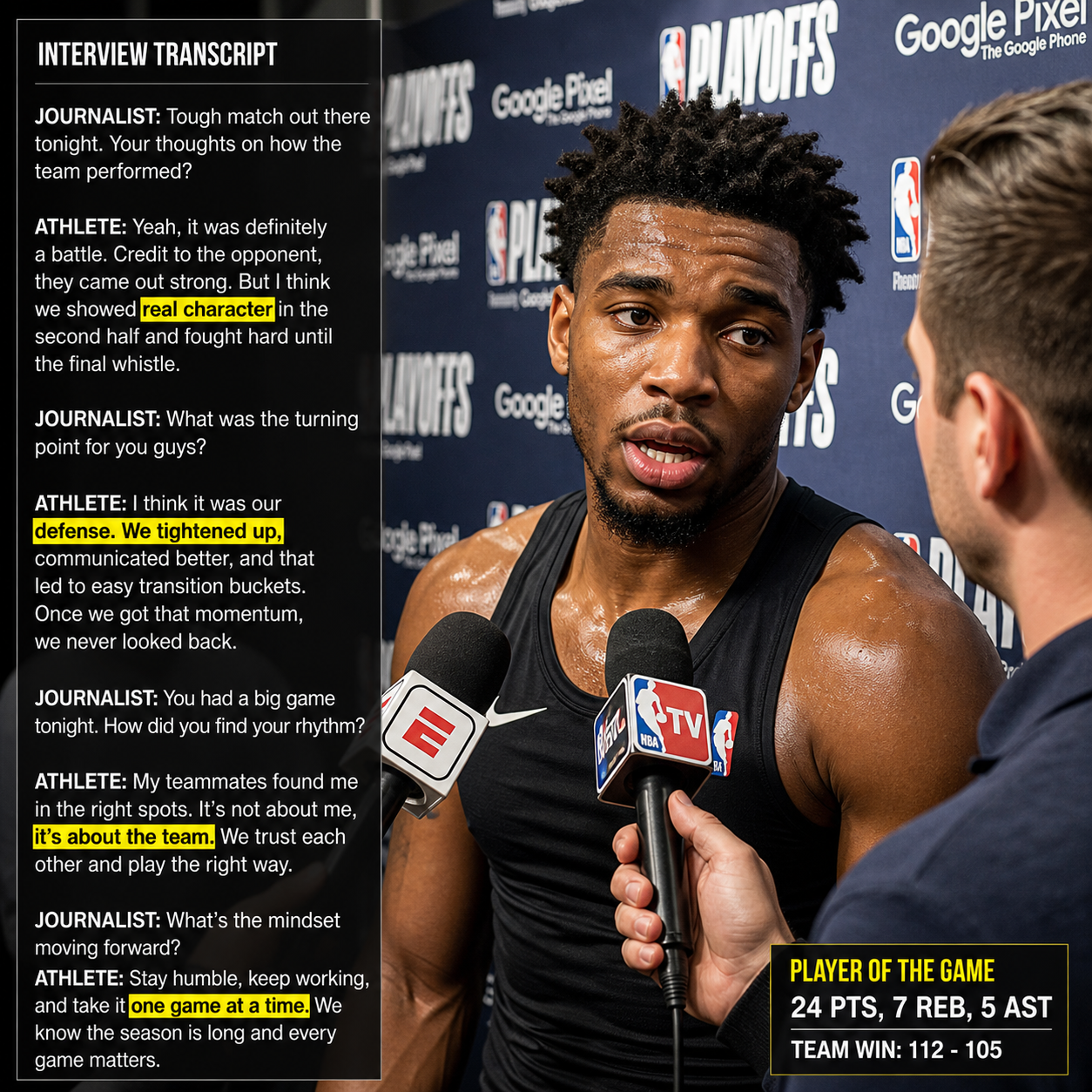
Speaker labels identify who is talking at each point in the transcript. In a standard post-game press conference, this typically means labeling the coach or athlete by name, and labeling reporters generically (e.g., "REPORTER" or "JOURNALIST") unless their identity is known and relevant. Getting speaker IDs wrong — attributing a quote to the wrong person — is one of the most damaging errors a transcript can contain.
Timestamps are used selectively depending on the outlet's needs. Some publications include them every few minutes to help readers locate specific moments in the accompanying video. Others omit them entirely for cleaner reading. There is no universal standard, but the decision should be made consistently within a publication.
The choice between verbatim transcription and clean-read transcription is an editorial one. Verbatim captures every filler word, false start, and repetition exactly as spoken. Clean-read removes verbal tics and lightly smooths grammar without changing meaning. Sports media outlets typically use clean-read for readability, reserving verbatim for legal or archival contexts. Whichever style is chosen, it should be documented in an editorial style guide and applied consistently across all transcripts.
Step 4 — Quality Assurance and Editorial Review
Quality assurance review is the step that separates a professional transcription workflow from a rushed one. A QA pass catches misheard words, incorrect names, and formatting inconsistencies before they reach readers.
In practice, QA in sports transcription focuses on a few high-risk areas. Player and team names are the most common source of errors — especially for international leagues where names are unfamiliar to transcriptionists. A reviewer who follows the sport will catch these; one who doesn't will miss them even on a careful read-through.
Technical sports terminology is the second major risk area. Tactical terms, position names, and competition-specific language vary by sport and region. A QA reviewer working on an NFL transcript needs different background knowledge than one reviewing a cricket press conference.
A practical QA protocol for sports transcription includes three checks: first, a read-through against the audio for accuracy; second, a review of all proper nouns against a prepared reference list of team rosters and staff names; and third, a formatting check to ensure speaker labels, timestamps, and style guide compliance are consistent throughout. This three-pass approach adds time, but it is the difference between a transcript that damages credibility and one that builds it.
Step 5 — Publishing and Meeting the Deadline
Finalized transcripts need to reach the website or newsroom quickly — and in a format that works for both readers and search engines. Turnaround time is the constraint that shapes every decision in the workflow.
For post-game press conferences, the industry expectation in professional sports media is typically 30 to 90 minutes from the end of the conference to publication. Breaking news contexts can compress that window significantly. This means QA shortcuts are sometimes made under pressure — which is why having a clear, documented workflow matters more than trying to improvise under deadline.
From an SEO perspective, transcripts benefit from a descriptive headline that includes the coach or athlete's name, the team, and the occasion (e.g., post-match, pre-game). Structuring the content with clear speaker labels and short paragraphs improves both readability and crawlability. Some outlets add a brief editorial summary at the top — two or three sentences contextualizing what was said — which helps readers decide whether to read the full transcript and gives search engines additional context.
Delivery format matters too. Most CMS platforms accept clean HTML or plain text with minimal markup. Agreeing on a standard delivery format with the editorial team in advance avoids last-minute reformatting that eats into already-tight deadlines.
Common Challenges Transcriptionists Face in Sports Contexts
Sports press conference transcription presents specific obstacles that general transcription work rarely involves. Knowing them in advance is half the battle.
- Accents and non-native English speakers: International athletes and coaches often speak English as a second or third language. Pronunciation patterns that differ from standard American or British English can cause both AI tools and less-experienced human transcriptionists to mishear words. The solution is familiarity — transcriptionists who regularly work with a specific league or team develop an ear for the speakers they encounter repeatedly.
- Crosstalk and overlapping voices: When multiple reporters speak at once, or when a coach talks over a question, the audio becomes nearly impossible to transcribe accurately. The standard practice is to mark overlapping sections as [CROSSTALK] or [INAUDIBLE] rather than guessing — guessing is how fabricated quotes end up in print.
- Background noise at venue: Air conditioning, crowd noise bleeding through walls, and equipment sounds all compete with the speaker. High-pass audio filtering can help, but sometimes the only solution is a slower, more careful listen.
- Unfamiliar proper nouns: A new signing, a rival team's player mentioned in passing, or a stadium name in another language — these are easy to mishear and hard to catch without sport-specific knowledge. Maintaining an updated reference sheet of names relevant to the current season is a practical fix that saves time in both transcription and QA.
The teams that handle these challenges best are the ones that treat sports transcription as a specialized skill, not a generic clerical task. The combination of good audio, the right tools, domain knowledge, and a structured QA process is what makes a transcript worth publishing.
Frequently Asked Questions
How long does it take to transcribe a typical sports press conference?
A 20-to-30-minute press conference typically takes 60 to 90 minutes to transcribe manually from scratch, including a QA pass. Using an AI-assisted hybrid workflow can reduce this to 30 to 45 minutes. Tight post-game deadlines often mean that speed and accuracy must be balanced carefully.
What is the difference between verbatim and clean-read transcription?
Verbatim transcription captures every word exactly as spoken, including filler words, false starts, and repetitions. Clean-read transcription lightly edits for readability without altering meaning. Most sports media outlets use clean-read format for published transcripts, as it is easier for readers to follow.
Can AI transcription software handle sports-specific terminology accurately?
Current AI tools handle general English well but struggle with sport-specific jargon, player names, and accented speech — particularly in noisy environments. AI is most useful as a first-draft tool, with a human editor completing the final review. Relying on AI output alone for publication without human QA carries a real risk of errors in names and technical terms.
Who is responsible for transcription errors in published media?
Responsibility typically falls on the editorial team or outlet that publishes the transcript. If transcription is outsourced, service agreements may define liability, but the outlet's reputation is on the line regardless. A clear QA process and a corrections policy are both essential.
How are transcripts formatted for online publishing and SEO?
Effective online transcripts use descriptive headlines with key names and context, short paragraphs, clear speaker labels, and a brief editorial summary. Clean HTML formatting improves crawlability. According to Google's helpful content guidelines, structured, readable content that serves user needs directly performs better in search — and well-formatted transcripts align naturally with those principles.