The Art of Asking Tough Questions in Sports Interviews
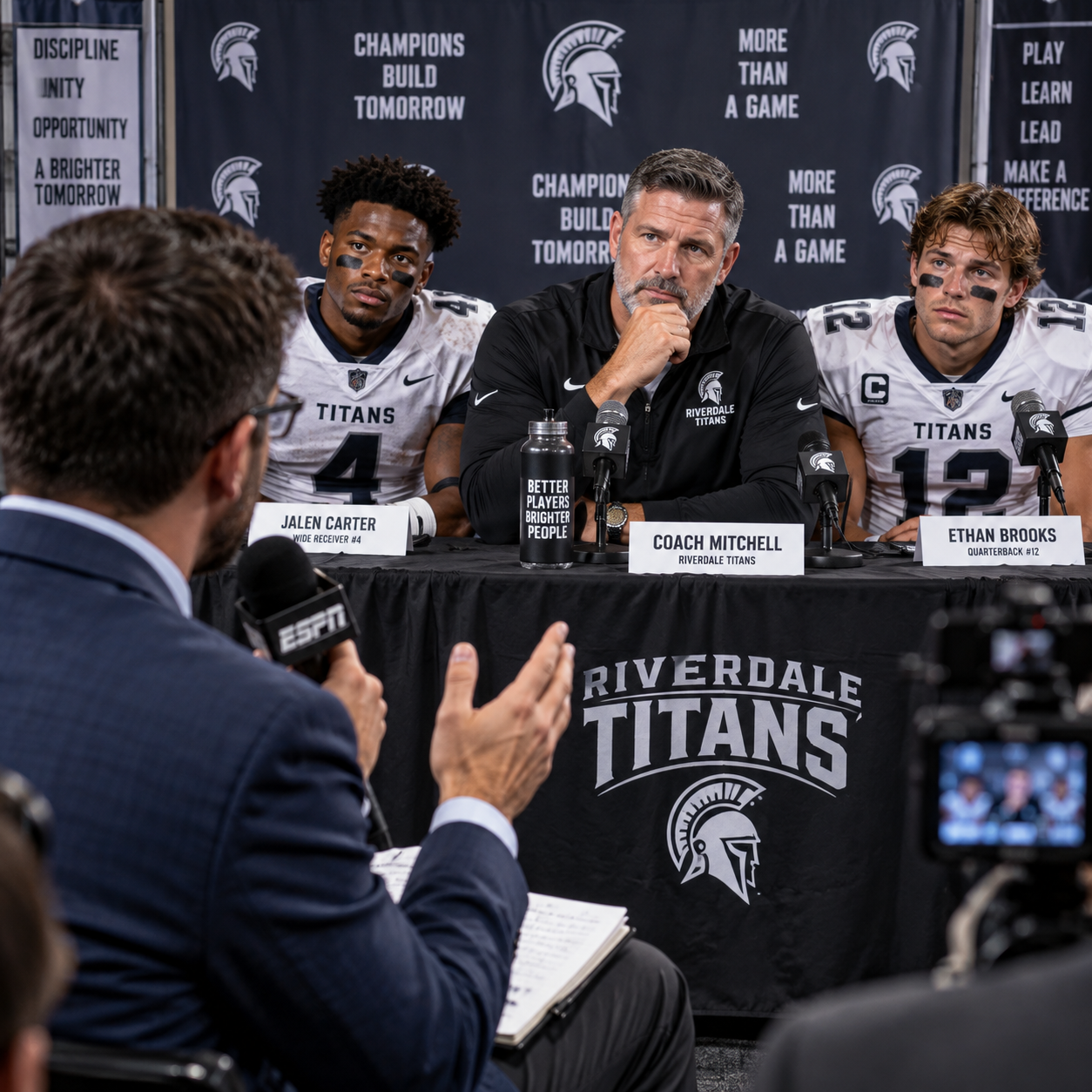
A tough sports interview question tests decisions, performance, responsibility, or public claims. It should help an audience understand what happened, why it happened, and what may change next, while giving the athlete, coach, or team executive a fair opportunity to respond.
What Makes a Sports Interview Question “Tough”?
A tough sports interview question is specific, relevant, evidence-based, and aimed at clarifying accountability rather than provoking conflict. Its difficulty comes from the issue it addresses, not from an aggressive tone.
Strong questions usually connect three elements: an observable event, a meaningful consequence, and a request for explanation. For example, a sports journalist might refer to a late tactical change, a missed defensive assignment, or a previous statement that now appears inconsistent. The question then asks the interviewee to explain the decision or its impact.
Compare these approaches:
- Weak: “Why was the team so bad tonight?”
- Stronger: “The team created few chances after halftime. What prevented the planned attacking adjustments from producing more opportunities?”
The second question is difficult because it requires detail. It does not assume incompetence, and it does not demand a particular answer. That distinction protects the quality of an on-record interview and makes the resulting sports press transcript more useful.
A difficult question can challenge an athlete’s performance, a coach’s strategy, or a general manager’s roster decision. It should still be concise enough to understand immediately. Long introductions often hide the central issue and give the interviewee several ways to avoid it.
Prepare Before the Interview or Press Conference
To prepare for a difficult sports interview, review the event, relevant statements, team context, and available transcript details before writing the question. Preparation turns a general reaction into a precise accountability question.
Begin with the primary evidence. Rewatch important sequences, check the official score or match report, and note when the decisive event occurred. In a post-game press conference, details such as substitutions, turnovers, penalties, shot selection, playing time, or defensive coverage can provide a firm foundation.
Next, review what the interviewee said earlier. An athlete may have described a specific preparation plan before the game. A coach may have explained why a player would receive limited minutes. A general manager or team executive may have stated that a roster change was intended to solve a known weakness. Those comments create legitimate opportunities for a follow-up question if the outcome differs from the stated objective.
A useful preparation sheet has four columns:
- Fact: What happened and when?
- Statement: What did the athlete, coach, or executive previously say?
- Impact: Why does the issue matter to the result or the people affected?
- Question: What explanation would help the audience understand it?
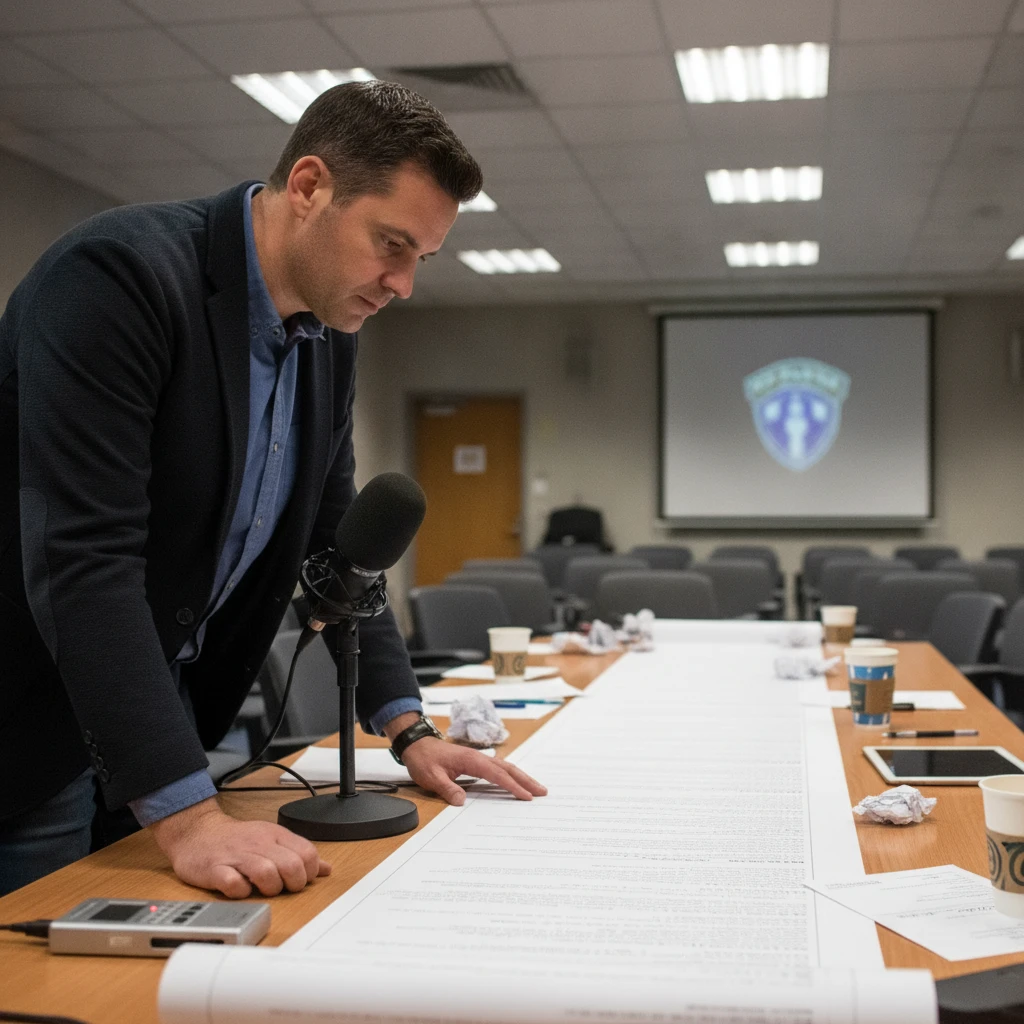
For transcript work, preserve the surrounding context. A clipped answer can appear contradictory when the full exchange shows that the speaker was addressing a different part of the question. Reviewing earlier transcript details helps the sports journalist avoid accidental misrepresentation.
How to Challenge Without Becoming Confrontational
To challenge an interviewee without sounding aggressive, use neutral wording, direct phrasing, and a clear separation between criticism of a decision and criticism of a person. Respectful language can still create real accountability.
Start with what is known rather than an accusation. “The team conceded twice after the formation changed” is more productive than “You lost the game with a terrible decision.” The first wording identifies an event and invites analysis. The second labels the coach and encourages a defensive response.
Useful question structures include:
- “What was the reasoning behind that decision?”
- “What information influenced the choice?”
- “Looking back, what would you change?”
- “How do you respond to the concern that this created an avoidable disadvantage?”
Avoid loaded premises, personal insults, and questions that contain their own verdict. The goal is not to make the interviewee admit failure on demand. The goal is to place the relevant issue on the record and obtain a meaningful explanation.
Tone also matters. Ask one question at a time, avoid interrupting unnecessarily, and leave enough silence for a complete answer. Choosing a measured approach may produce less dramatic footage, but it often produces a more informative transcript and a clearer public record.
Question Types for Common Sports Situations
The best difficult question depends on the situation, but most sports interview challenges fit a small set of practical frameworks. Each framework links a concrete event to responsibility, impact, or next steps.
Poor performance
Ask about the specific weakness rather than describing the entire performance as a failure. “What broke down in the second half?” is stronger than “Why did everyone collapse?” An athlete can then address execution, preparation, communication, or opponent pressure.
Tactical or selection decisions
Ask the coach to explain the intended benefit and the result. A useful structure is: “What problem was the adjustment designed to solve, and why did you keep it in place after the opponent began exploiting it?” This tests the decision without presuming bad faith.
Injuries and availability
Ask only for information the interviewee is entitled and prepared to share. “Is the player unavailable because of an injury, and is there a projected timetable?” is appropriate when the team has confirmed an injury. Pressuring someone to disclose private medical details is not.
Controversial calls
Separate the ruling from the emotional reaction. Ask, “What explanation did the officials provide, and which part of the decision do you believe affected the match?” This creates room for criticism while distinguishing confirmed facts from opinion.
Team conflict
Do not turn rumor into a premise. Ask about observable conduct or an official statement: “There appeared to be a disagreement during the timeout. What was the team trying to resolve?” If no reliable information exists, speculation should not be presented as a fact.
Unmet expectations
Connect public goals to current results. An executive might be asked, “The stated aim was to improve the defense this season. What evidence shows that the roster plan is working, and what remains unresolved?” The question invites measurable accountability without pretending that one result settles a long-term judgment.
The Follow-Up Question Is Often the Most Important
A follow-up question matters because it tests whether the first answer actually addressed the issue. Good follow-ups clarify vague language, examine contradictions, and return to the central point without simply repeating it.
Listen for words such as “execution,” “circumstances,” “we have to improve,” or “it was a collective effort.” These phrases may be accurate, but they do not always explain what happened. A focused follow-up can ask, “Which part of the execution was most responsible?” or “What specific change will the team make before the next game?”
When an answer conflicts with an earlier statement, present the contrast fairly:
- “Before the game, you said the plan was to attack through the wings. Today, most possessions went through the middle. Did the opponent change that plan?”
- “You said the player was available for selection. Has that assessment changed, or was the issue tactical?”
If the interviewee avoids the question, shorten the route back to it. “I understand the broader point. Specifically, was the decision yours?” This wording identifies the unanswered part without escalating the exchange.
There is a limit. Repeating the same question with increasing hostility rarely improves the answer. One precise follow-up, followed by a new angle or a clear record of the non-answer, is usually more valuable than an argument.
Reading the Answer in the Transcript
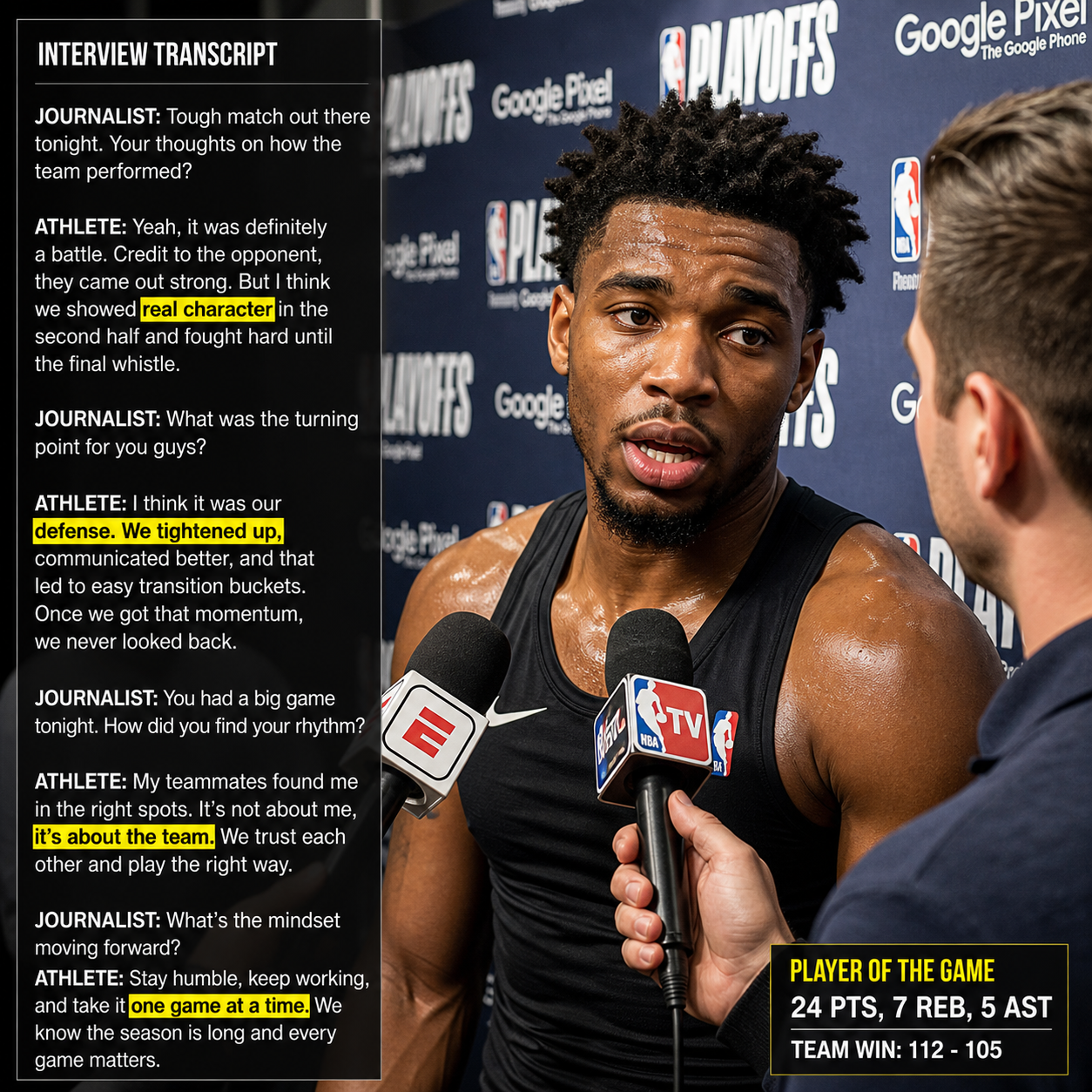
A sports press transcript should present the question and answer accurately, with enough context to preserve meaning. Clear speaker identification, faithful wording, and transparent editing matter as much as the journalist’s original question.
Use labels that distinguish the sports journalist from the athlete, coach, or general manager. If several reporters ask questions, preserve the order when it affects the exchange. Minor edits for repetition or obvious verbal clutter may improve readability, but they should not remove qualifications, change emphasis, or make a cautious statement sound definitive.
Context is especially important when an answer contains a short phrase such as “that was the plan” or “we will see.” Readers need to know what the phrase refers to. Include the relevant question, identify the subject, and avoid placing separate answers together in a way that implies a connection that did not exist.
Transcripts should also distinguish fact from interpretation. If a reporter says a decision “cost the team the game,” that is an analysis, not an established fact. A cleaner transcript records the observable event and allows the interviewee’s response to stand beside it.
For publication, review names, titles, statistics, timestamps, and terminology. The strongest transcript is not the most sensational one. It is the one readers can trust when checking what was asked, what was answered, and what remains unresolved.

Ethical Boundaries in Difficult Sports Interviews
Ethical boundaries require journalists to pursue accountability without exploiting privacy, grief, medical uncertainty, or unsupported allegations. A difficult question should serve the public interest and remain proportionate to the situation.
Injury questions require particular care. Confirmed information about availability may be relevant to competition coverage, while diagnosis details, treatment decisions, and private medical history may not be appropriate to request. Follow official updates and attribute information clearly.
Emotional timing also matters. Immediately after a serious injury, elimination, death, or traumatic incident, a question about responsibility may be premature. The issue may still deserve coverage, but a journalist can first establish whether the interviewee is able and willing to respond.
Do not present rumors as questions disguised as facts. “How do you respond to reports that the locker room is divided?” can still amplify an unsupported claim. If the report has no reliable basis, the better decision may be to leave it out. When a documented allegation is genuinely newsworthy, identify its source and give the subject a fair opportunity to answer.
Finally, preserve the difference between accountability and humiliation. An athlete can be asked to explain a missed assignment, and a coach can be asked to defend a tactical choice. Neither needs to be mocked, cornered, or treated as guilty before answering. Accuracy, fairness, and useful context are the standards that make an on-record interview worth publishing.
Frequently Asked Questions
What is the best way to ask a tough question to an athlete?
Use a specific event, neutral wording, and one clear request for explanation. Focus on performance or decisions that can be discussed publicly, then allow the athlete to answer before asking a concise follow-up.
How can journalists challenge a coach without sounding aggressive?
Describe the tactical event first, ask what the coach intended, and then address the result. Critique the decision rather than assigning a personal label to the coach.
What should a reporter do when an interviewee avoids the question?
Identify the unanswered point and ask it again in shorter language. If the person still avoids it, record the response accurately and move on rather than turning the interview into a confrontation.
How should difficult questions and answers be presented in a sports press transcript?
Use clear speaker labels, preserve the sequence and essential context, distinguish fact from commentary, and edit only for readability without changing meaning. A trustworthy transcript shows both the challenge and the response fairly.