The Impact of Instant Replay and VAR on Post-Match Interviews
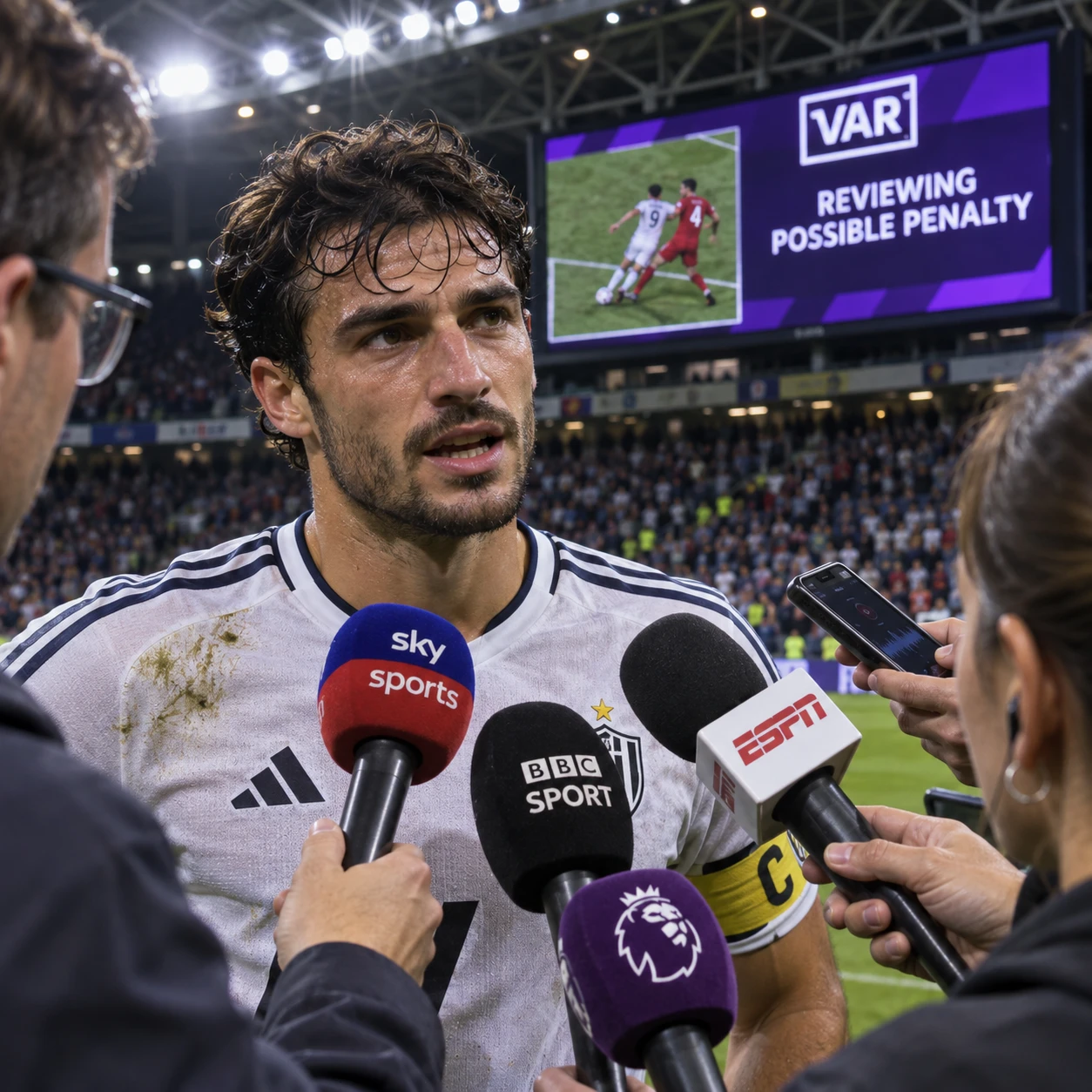
When a Video Assistant Referee (VAR) review changes a key moment, the final whistle rarely ends the discussion. A penalty overturned, a goal ruled out, or a long review can quickly become the focus of post-match interviews, press conferences, and sports transcripts.
That focus creates a reporting challenge. Players and coaches may have limited information about what officials reviewed, while journalists need to distinguish what happened on the field from the decision made after replay. Careful questions and accurate transcripts preserve both the controversy and the wider story of the match.
How Replay Decisions Reshape the Post-Match Conversation
Instant replay and VAR reshape post-match conversations by giving one or more decisions an extended public life. When a review affects the score or a pivotal moment, players, coaches, and journalists often return to it after the match.
In a match without a major review, interviews may center on tactics, performance, injuries, or the result. A review can redirect that attention. A disallowed goal or overturned penalty becomes a shared reference point, and questions often begin with what the interviewee saw, when they learned the decision, and how it affected the team.
The discussion also involves different kinds of knowledge. Players describe what they experienced on the pitch; coaches may discuss the decision’s effect on the game plan; referees and match officials are responsible for the ruling and the review process. These perspectives should not be treated as interchangeable. A player’s belief that contact occurred is not evidence of what the VAR team saw, and a coach’s reaction does not establish the officials’ reasoning.
For reporters, the central task is to explain why the decision matters to the match without assuming that replay footage alone settles every question. A review may clarify whether an incident met the rules for intervention, but it can leave room for debate about interpretation, timing, or the impact on the result.
The Questions Players and Coaches Face
Players and coaches are commonly asked what they saw, how a review affected the match, and whether they agree with an overturned or upheld call. The most useful questions separate personal reaction from claims about the officials’ process.
Questions that invite precise answers include:
- “What did you see from your position when the incident happened?”
- “Did the delay affect your team’s preparation for the restart?”
- “When did you learn the decision had been changed?”
- “How did the call influence your approach in the minutes that followed?”
- “Are you commenting on the decision itself, or on its effect on the match?”
These prompts help avoid a common trap: asking a player to explain a referee’s decision they may not understand. If an interviewee speculates about what the VAR officials discussed, a follow-up can clarify whether they have direct knowledge or are expressing an opinion. That distinction matters in press conferences, where a short answer may otherwise be repeated as a factual account.
Questions should also reflect the incident’s place in the game. An early review that briefly interrupts play may call for a different line of inquiry from a late decision that changes the score. Establish the score, timing, and immediate consequences before asking whether the call was fair. This keeps the interview grounded in what the person can credibly describe.
How VAR Affects Tone and Timing
VAR can affect interview tone and timing because a review adds waiting, uncertainty, and a new decision to an already emotional match. The effect varies by incident and interviewee, so journalists should describe what they observe rather than assume a particular reaction.
A player may leave the field still unsure whether a goal will stand. A coach might have to adjust instructions during a stoppage, then answer questions about the call after the final whistle. If a decision is overturned, relief or frustration may shape the first response. If it is upheld, the same waiting period can still become part of the story.
Timing matters in the interview room as well. Someone who has just finished competing may give a brief or emotional answer, while a later press conference may allow more reflection. Neither setting guarantees a more accurate explanation of officials’ reasoning. The interview’s timing should be recorded when it helps readers understand the response.
Journalists can keep the tone fair by using neutral wording: “The penalty was overturned after a review” is more precise than “VAR robbed the team,” unless the latter is clearly presented as a quoted opinion. Attribute emotion to the speaker, and avoid turning an individual reaction into a claim about all players or coaches.
Reporting the Decision Accurately
Accurate reporting separates the on-field event, the review, and the final ruling. A clear account tells readers what initially happened, what officials reviewed, and what decision followed, without claiming more than the available information supports.
Use a simple three-part sequence:
- On-field call: State the referee’s original decision, such as awarding a penalty or disallowing a goal.
- Review: Explain that the Video Assistant Referee checked the incident, or that the referee went to the pitch-side monitor if that occurred.
- Outcome: Record whether the original call stood or was overturned, and the practical result, such as a goal being allowed or play restarting with a free kick.
Do not use “VAR overturned the call” if the referee reviewed the footage and made the final decision. The distinction helps readers understand the roles of the match officials. Likewise, avoid saying that a review “proved” an interpretation unless the governing body’s published explanation supports that wording.
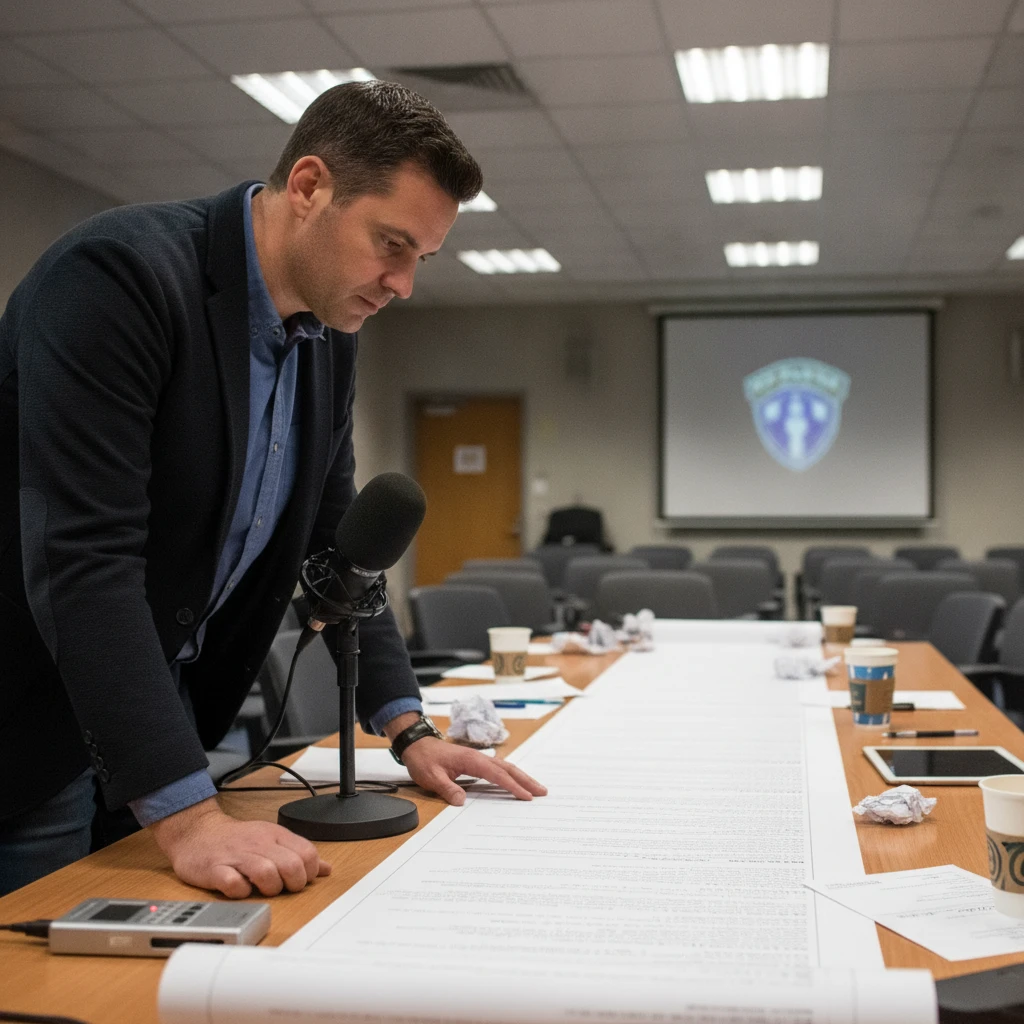
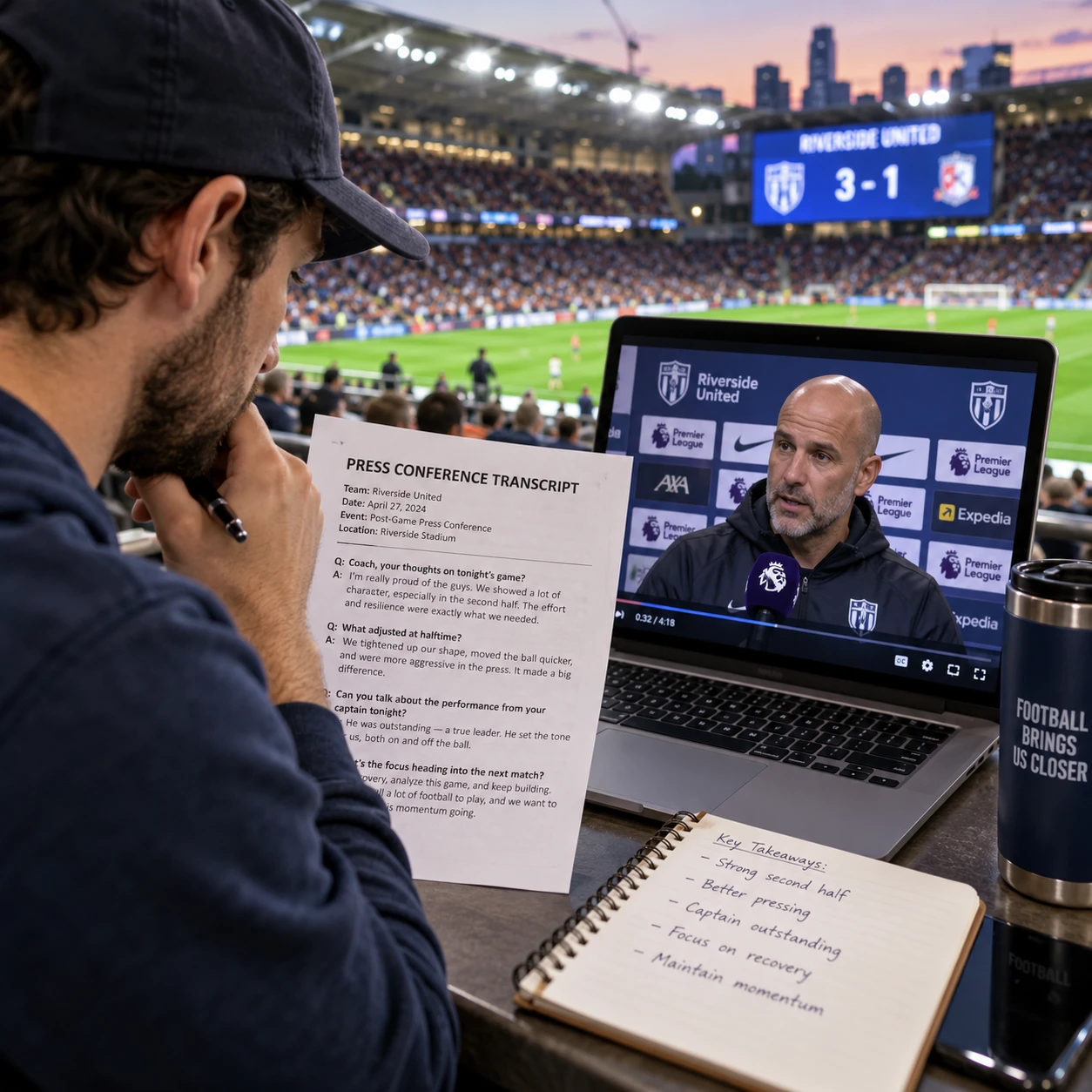
For transcripts, include enough context to make a question understandable when read on its own. “What did you think of that?” may be unclear without the preceding exchange. A concise description of the incident, the speaker’s response, and any relevant clarification gives the transcript value as a record, not just a collection of quotes.
What Transcript Editors Should Preserve
Transcript editors should preserve context, clear speaker attribution, and the sequence of questions and answers. Those details show whether a remark concerns the live incident, the replay review, or the final decision.
When editing a post-match interview, retain the following information where available:
- Speaker identity and role: Distinguish a player, head coach, journalist, referee, or club representative.
- Decision sequence: Keep the original call and the later outcome in the correct order.
- Question context: Include enough of the question to explain a short or qualified answer.
- Uncertainty and qualification: Preserve phrases such as “from where I was” or “I haven’t seen the replay.”
- Meaningful corrections: If a speaker clarifies or revises an earlier statement, retain the correction rather than silently smoothing it away.
Editors may remove verbal clutter for readability, but they should not make a hesitant or qualified response sound certain. They should also avoid adding an explanation of the rules to a speaker’s words unless it is clearly marked as editorial context. A transcript can be concise and still retain the order, attribution, and nuance readers need.
Keeping Interviews Focused on the Match
Journalists can cover replay controversy without letting it consume every post-match interview. Ask about the decision, then connect it to the match’s broader performance, tactics, and turning points.
A practical approach is to give the decision a defined place in the conversation. Start with a neutral question about what happened and how the ruling affected the team. Then move to relevant match analysis: whether the team created enough chances, how it responded after the stoppage, or what changed tactically. If the interviewee continues to discuss the call, follow up fairly, but do not treat repetition as new evidence.
For example, after a late overturned penalty, a reporter might first ask how the team experienced the review and its outcome. A follow-up could ask what the side did during the delay and how it approached the remaining minutes. The interview then records the controversy while still explaining the team’s response and the match itself.
This balance is useful for sports transcripts, too. Organize the exchange so readers can find the replay-related comments without losing the surrounding discussion. A decision can be a major part of the story; it does not automatically explain the entire result.
Frequently Asked Questions
How does VAR change post-match interview questions?
VAR adds questions about what players and coaches saw, how a review affected the match, and whether an overturned or upheld call changed the team’s approach. Reporters should distinguish personal reactions from knowledge of the officials’ process.
Why do reviews become a focus in press conferences?
Reviews often involve high-stakes moments, such as goals, penalties, or dismissals. Their delays and outcomes can influence the result, giving journalists and interviewees a shared subject to discuss after the match.
What should a transcript include when a decision is overturned?
It should make clear what the original on-field call was, that a review took place, and what decision followed. Preserve speaker attribution, the question that prompted the answer, and any uncertainty or qualification in the response.
How can journalists balance controversy with match analysis?
Ask focused questions about the decision and its practical effect, then move to performance, tactics, and other turning points. This gives the controversy fair coverage without implying that one call explains every part of the result.