Analyzing Player Interviews: How to Read Between the Lines
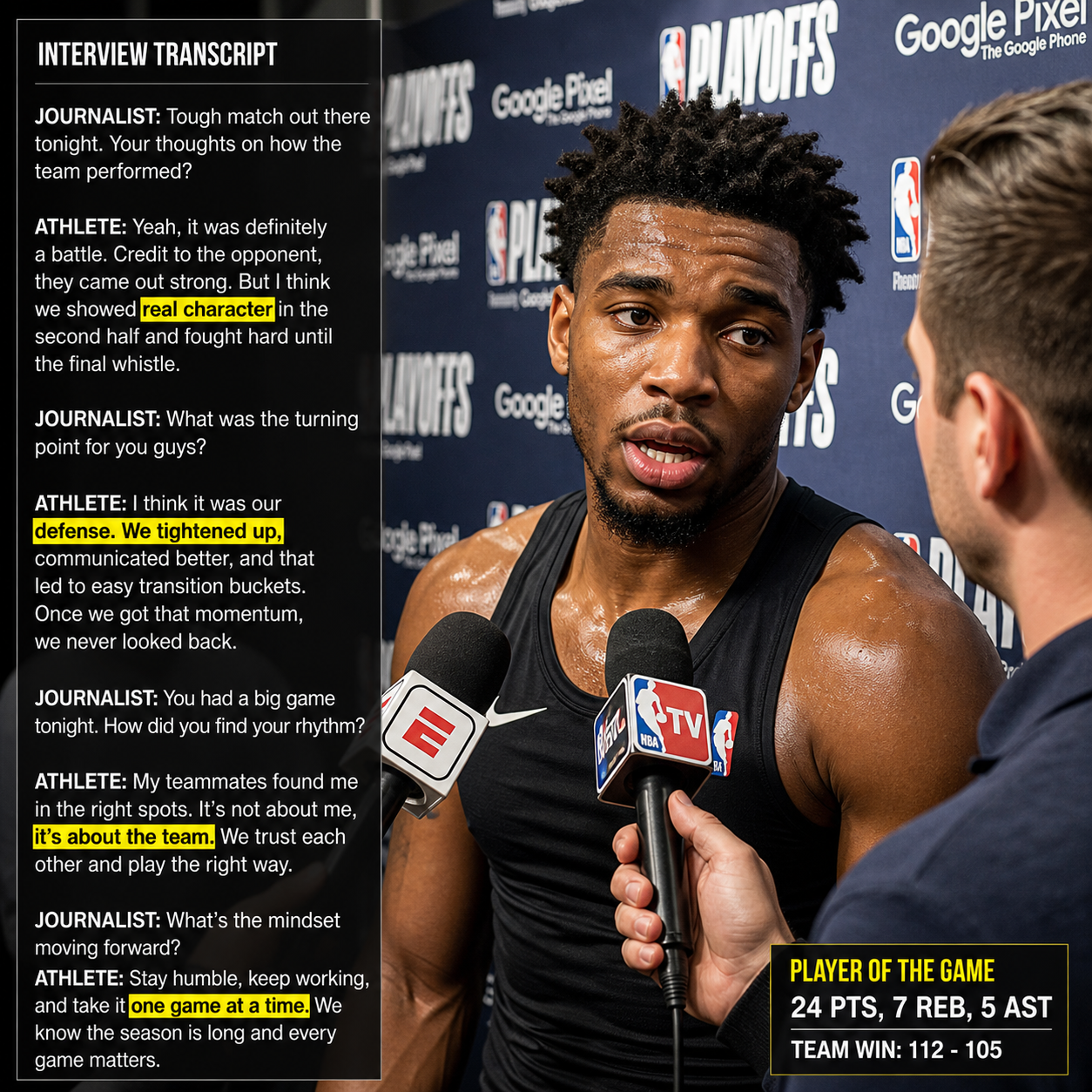
Player interviews often look straightforward: a journalist asks a question, an athlete answers, and the exchange becomes part of the sports news cycle. Yet a short response can carry tactical, emotional, and media-management meaning beyond its literal wording. The safest way to interpret it is to begin with the transcript, then add context carefully.
Analyzing sports press transcripts means studying the relationship between interview questions, tone and language, nonverbal communication, context and timing. It also means knowing where evidence ends. A player may sound frustrated without criticizing a coach, or use diplomatic language simply because the setting demands restraint. Reading between the lines is useful only when it remains disciplined.
Why Player Interviews Require Careful Reading
Player interviews require careful reading because spoken answers serve several purposes at once. They can explain a performance, protect team relationships, reassure supporters, satisfy media duties, or avoid creating a new story. The literal sentence is only one layer of meaning.
Consider a player who says the team must improve the details after a narrow defeat. That phrase might refer to defensive positioning, finishing, concentration, or simply a conventional post-match response. Without the full question and match context, assigning one precise meaning would go too far.
Sports professionals also operate under unequal pressure. A captain may feel responsible for teammates, while a substitute may be asked about selection. A striker might face repeated questions about a goal drought; a defender may be questioned about one error. Their answers are shaped by those expectations.
This is why a transcript should be read as a record of public communication, not a transparent window into private thoughts. Direct quotes are evidence of what was said. They are not automatic proof of what the speaker intended, believed, or planned.
Start With the Question and Interview Context
Start with the interview question and its context before interpreting the player’s answer. The wording, match result, timing, venue, audience, and interview format can all influence what a response means.
Questions are rarely neutral. Compare How did you assess the performance? with Why did the team collapse after taking the lead? The first invites a broad assessment; the second presupposes failure and asks the player to explain it. A defensive answer may reflect the framing of the question rather than personal hostility.
Timing matters as well. A player speaking seconds after a defeat has less time to process events than one appearing at a scheduled press conference the next day. A post-match interview in a crowded mixed zone often produces brief, cautious answers. A longer sit-down conversation may allow more detail and correction.
- Match situation: victory, defeat, draw, comeback, injury, or controversial decision.
- Interview setting: live broadcast, mixed zone, press conference, club media, or long-form feature.
- Audience: local reporters, national media, supporters, teammates, or an international audience.
- Question sequence: earlier answers may explain why a later response becomes shorter or more guarded.
A useful habit is to write the question above the answer when reviewing a transcript. This prevents isolated phrases from dominating the analysis and reveals whether the player actually addressed the issue being discussed.
Examine Word Choice, Tone, and Repeated Phrases
Word choice, tone, qualifiers, pauses, and repeated phrases reveal how firmly or cautiously a player is presenting an idea. These signals should guide interpretation, while remaining separate from factual conclusions.
Pay attention to verbs and qualifiers. We will sounds more committed than we hope to. I do not know may indicate genuine uncertainty, a lack of authority, or a decision to avoid comment. Words such as probably, hopefully, for now, and at this stage narrow or soften a claim.
Repeated terms can also matter. If a player returns several times to the group, the emphasis may be collective responsibility. If the transcript repeatedly mentions patience or process, the language may reflect a club’s established media narrative. That does not prove the player is scripted, but it identifies a vocabulary worth comparing with other interviews.
Written transcripts have limits. They may preserve pauses, repetitions, and unfinished sentences, but they cannot fully reproduce volume, facial expression, or timing. If video is available, nonverbal communication can add context: a long pause, a smile, a change in pace, or visible discomfort. None should be treated as definitive evidence. Fatigue, lighting, translation, and editing can mislead.
Look for contrasts within the same answer. A player may praise a teammate before adding that there are areas to address. That combination could signal balance, diplomacy, or a specific concern. The strongest analysis describes the observable pattern first and labels the interpretation as provisional.
Separate What Was Said From What Is Inferred
Separate direct statements from inference by marking what the transcript proves, what it suggests, and what remains unknown. This three-level method reduces exaggeration in sports press coverage.
1. Direct evidence
Direct evidence is the player’s explicit language. For example, a player may say that the medical staff is monitoring an injury or that the team did not defend well enough. Those claims can be reported as statements, with the usual care about accuracy and attribution.
2. Reasonable interpretation
An informed interpretation connects wording with context. If a player avoids discussing a contract and says the focus is on the next match, it is reasonable to describe the answer as guarded or diplomatic. It is not reasonable to present that answer alone as proof that a transfer is imminent.
3. Speculation
Speculation begins when the analysis claims hidden motives, private conflict, or future decisions without supporting material. Phrases such as this may indicate, one possible reading is, and the transcript does not establish help maintain the boundary.
Use a simple evidence test: What exact words support this conclusion? If no sentence in the transcript does, the conclusion belongs in a clearly labeled context section, or it should be omitted. This approach produces more trustworthy performance analysis than turning every pause or omission into a revelation.
Read Answers Within the Broader Sports Narrative
Read player comments alongside the broader sports narrative, but use outside context to test an interpretation rather than force one. Recent performances, team dynamics, injuries, selection issues, transfers, and public storylines can change how an answer is understood.
A comment about needing to stay together may be routine after any difficult match. It may also carry greater significance if reports have focused on dressing-room tension. The transcript alone cannot settle that question. Compare the wording with the player’s previous interviews, teammates’ comments, coach statements, and observable events.
Context should be specific. If a player discusses rotation, examine recent selection patterns rather than assuming dissatisfaction. If the subject is an injury, distinguish a player’s personal update from an official medical diagnosis. If transfer speculation dominates coverage, remember that journalists may repeatedly ask about it even when the player has no authority to make an announcement.
Media narratives create pressure in both directions. A single phrase can be framed as evidence of confidence, conflict, loyalty, or impending departure. Analysts should resist the most dramatic interpretation when a conventional explanation fits the evidence equally well.
A Practical Framework for Analyzing a Player Interview
To analyze a player interview, read the complete exchange, classify the language, compare answers, record omissions, and state conclusions with calibrated confidence. The following sequence works for short post-match comments and longer press transcripts.
- Read the full exchange. Include the interviewer’s question, follow-up questions, and the player’s complete answer. Do not begin with a headline quote.
- Mark the key statements. Highlight claims about performance, tactics, teammates, injuries, selection, contracts, or future plans.
- Assess tone carefully. Note confidence, defensiveness, warmth, irritation, uncertainty, or brevity. Describe the language before explaining its possible meaning.
- Compare related answers. Does the player use the same wording across several questions? Do they become more specific, or retreat into general language?
- Note omissions and boundaries. Record what the player declines to answer, but do not assume the reason. They may lack information, follow club policy, or simply have limited time.
- Add verified context. Use the match situation, season form, team dynamics, selection history, or official injury information to test the reading.
- Write a cautious summary. Separate the direct quote, the strongest interpretation, and the unresolved alternatives.
A useful final format is: The player explicitly said X. In context, the wording may suggest Y. However, the interview does not establish Z. That structure gives readers insight without pretending that public language provides certainty.
Common Mistakes When Interpreting Player Comments
The most common mistakes are quote-mining, ignoring the question, treating scripted language as proof, confusing confidence with certainty, and presenting speculation as fact. Each error can distort a sports press transcript.
- Quote-mining: Analysts select the most dramatic sentence and remove the qualification that follows it. They do this because short quotes travel well on social media. The result can reverse the original meaning. Read the surrounding answer and include essential caveats.
- Ignoring the question: A vague response may seem evasive until you see that the question was broad or repetitive. Always pair the answer with the exact wording and identify whether the player actually addressed the claim.
- Treating scripted language as proof: Familiar phrases such as we take it game by game may reflect media training, but they do not prove dishonesty or hidden conflict. Describe the phrase as conventional unless other evidence gives it added meaning.
- Confusing confidence with certainty: A confident tone cannot guarantee a tactical prediction, recovery timeline, or transfer outcome. Confidence describes presentation, not accuracy.
- Presenting speculation as fact: A pause, omission, or change in wording can support a question for further reporting. It cannot by itself establish a dispute, injury severity, or intended move.
Frequently Asked Questions About Player Interview Analysis
What does reading between the lines mean in a player interview?
Reading between the lines means examining wording, tone, context, emphasis, and omissions to identify possible meanings beyond the literal statement. It does not mean inventing private thoughts or treating interpretation as fact.
How can you identify a guarded or diplomatic answer?
Look for broad phrases, repeated qualifiers, limited detail, topic changes, or answers that return to team-focused language. These signs suggest caution, although they do not reveal why the player is cautious.
Why is the interviewer’s question important?
The question defines the issue being answered and can contain assumptions or pressure. A response that sounds defensive may simply be reacting to a leading, repeated, or narrowly framed question.
How should analysts handle ambiguous comments?
Present the direct quote first, explain the strongest reasonable interpretation, and mention credible alternatives when they exist. Use language such as may or could, and state what the transcript cannot establish.
What is the difference between transcript analysis and speculation?
Transcript analysis ties conclusions to observable words, question structure, tone, and verified context. Speculation goes beyond that evidence by claiming motives, private relationships, or future actions without sufficient support.
Good player-interview analysis gives readers more than a reaction to a headline quote. It reconstructs the exchange, respects the limits of nonverbal communication and public language, and distinguishes evidence from possibility. That discipline makes sports press transcripts more useful for understanding performance, team dynamics, and media narratives without overstating what any player actually said.