How to Conduct Effective Sports Interviews: Tips from Industry Professionals
A great sports interview rarely happens by accident. Behind every candid postgame quote or revealing press conference exchange is a reporter who did the work before the camera rolled — studied the subject, prepared sharp questions, and knew when to abandon the script entirely. Whether you're covering a local high school team or credentialed for a major league press box, the fundamentals of strong sports journalism are the same.
Why Interview Technique Matters in Sports Media
Strong interview technique is what separates professional sports coverage from forgettable filler. The quotes and exchanges captured in an athlete interview or press conference become the raw material for transcripts, feature stories, broadcast segments, and social content that audiences actually engage with.
Generic questions produce generic answers. Ask a quarterback how the game went and you'll get a cliché about taking it one play at a time. Ask him specifically about the decision he made on third-and-eight in the fourth quarter — and suddenly you have a story. The craft of sports journalism lives in that gap between a question that fills airtime and one that fills notebooks.
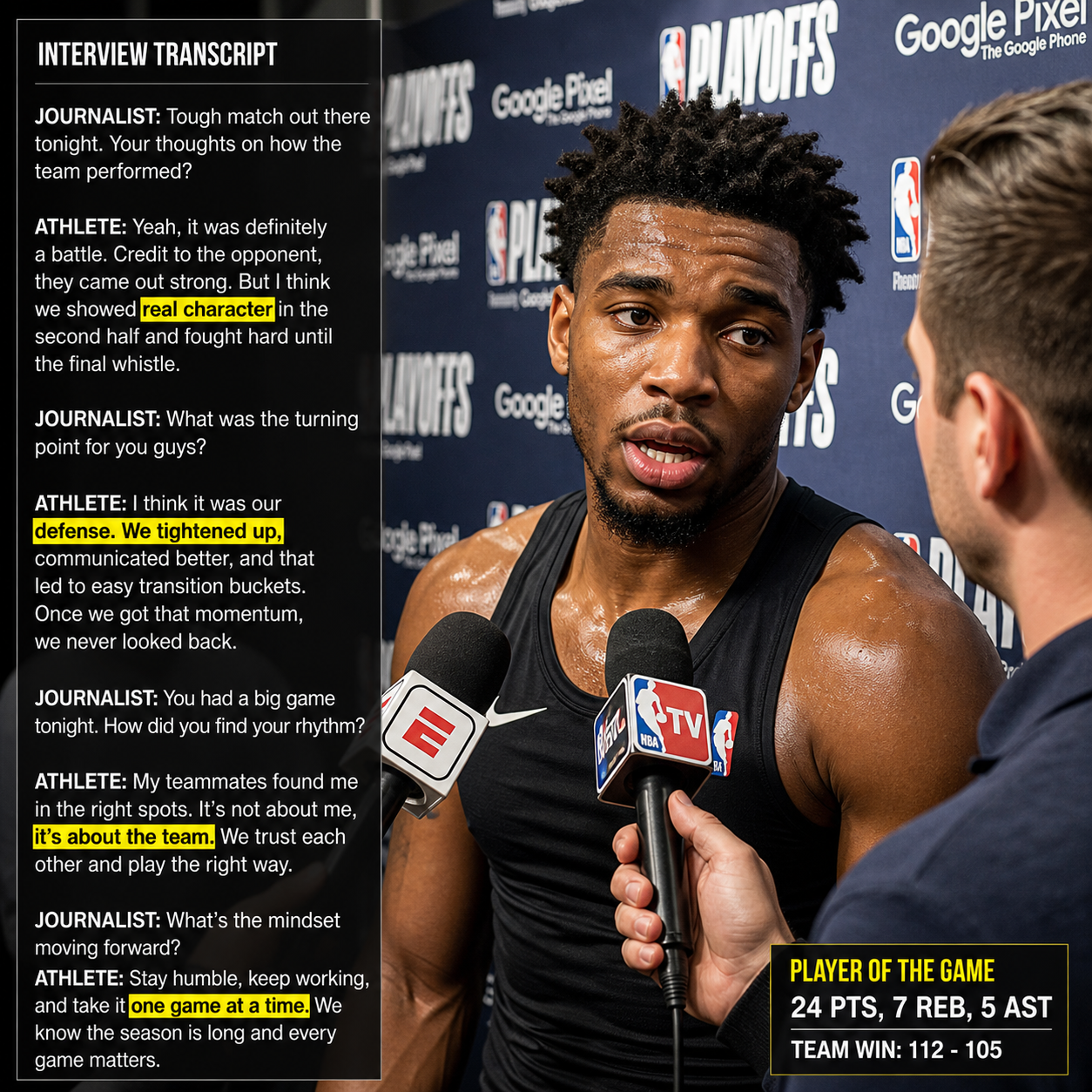
There's also a downstream effect worth understanding: the quality of your interview directly determines the quality of your interview transcript. Platforms and outlets that publish verbatim exchanges rely on reporters who ask questions that draw out specific, usable content. A transcript full of vague non-answers helps no one.
Preparing Before the Interview: Research and Question Strategy
Effective interview preparation starts at least 24 hours before you're in the room. That means reviewing recent game footage or box scores, reading the athlete's previous media appearances, and understanding the team's current situation — standings, injuries, internal storylines.
From that research, build a tiered question list:
- Anchor questions — the two or three you absolutely must ask, tied to the most newsworthy angle
- Open-ended questions — broad enough to let the subject take the conversation somewhere unexpected ("Walk me through what happened when...")
- Targeted follow-ups — specific probes you've prepared based on what you already know, ready to deploy if the subject goes shallow
The ratio matters. Experienced sports reporters typically open with an open-ended question to loosen the subject up, then move toward more specific territory once a baseline of comfort is established. Going in hard with a pointed question in the first thirty seconds often produces defensive, closed-off answers.
One practical note: keep your question list visible but don't read from it. Athletes and coaches notice when a reporter is just working through a checklist — and it kills the conversational energy that produces good quotes.
Building Rapport Quickly with Athletes and Coaches
Rapport in sports media is built fast or not at all. Post-game locker room access typically lasts minutes, not hours, which means a sports reporter needs to establish trust almost immediately.
The most reliable shortcut is demonstrating that you've done your homework. Mentioning a specific play, a career milestone, or a detail from a previous interview signals that you're not just another reporter with a recorder. Athletes respond to people who've taken them seriously enough to prepare.
Body language matters too. Making eye contact, mirroring the subject's energy level (subdued after a loss, energized after a win), and physically positioning yourself at the same level rather than hovering over someone sitting down — these are small adjustments that reduce friction.
Avoid starting with controversy. Even if you need to ask a difficult question, lead with something that lets the subject feel seen as a person first. A coach who just lost a close game is more likely to open up about a controversial fourth-quarter call if the first minute of conversation didn't feel like an ambush.
Mastering the Press Conference Format
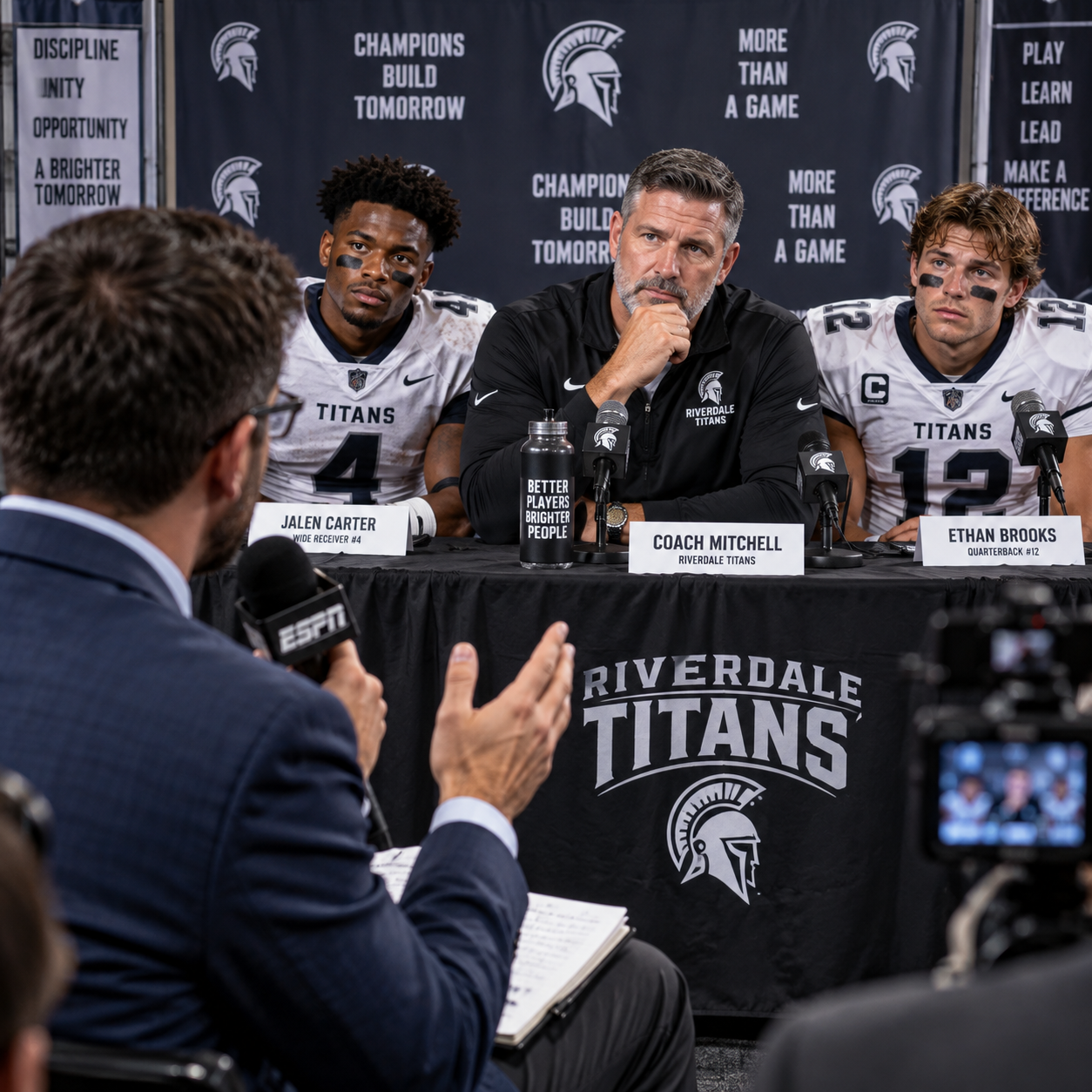
Press conferences operate by different rules than one-on-one interviews, and understanding those rules is essential for any sports journalist working in a credentialed media environment.
In a press conference, you're competing for airtime with dozens of other reporters. The question you ask will be heard by everyone in the room — and often broadcast or published verbatim. That creates two pressures: asking something genuinely useful, and not embarrassing yourself in front of your peers.
A few principles that hold up in practice:
- Ask one question at a time. Multi-part questions give the subject an easy out — they answer the easiest part and move on.
- Position your question after a topic has been introduced by another reporter if you want to follow up. Jumping to an entirely new subject when the room is focused elsewhere rarely lands well.
- Keep your question short. Long preambles signal insecurity and eat up your credibility before the subject even starts answering.
- Follow up if the answer is evasive — but do it once, cleanly, not repeatedly in a way that turns into a confrontation.
Press conference etiquette also includes knowing when not to ask. If a subject is visibly distressed or a question has already been answered thoroughly, pushing again just for the sake of it damages your relationship with the team's media relations staff — and media access is a privilege that can be revoked.
Active Listening and the Art of the Follow-Up
Active listening is the skill that separates a good sports journalist from a great one. The best follow-up questions come from paying close attention to what's actually being said — not mentally preparing your next question while the subject is still talking.
Athletes often bury the most interesting material inside a longer answer. A coach might spend forty-five seconds explaining a tactical decision and then drop a single sentence about a conversation he had with a player at halftime that changes the entire story. If you're not listening carefully, you miss it. If you are, that's your follow-up.
Effective follow-up questions typically do one of three things:
- Dig deeper into something the subject mentioned but didn't fully explain
- Gently challenge an assumption embedded in the answer
- Ask for a specific example when the subject has given a general statement
The phrase "can you give me an example of that?" is one of the most underused tools in sports media. It's non-confrontational, it's open-ended, and it almost always produces something more quotable than the original answer.
Handling Difficult Subjects: Evasive Answers and Sensitive Topics
Every sports reporter eventually sits across from someone who doesn't want to be there. Navigating evasive answers and sensitive topics without losing professionalism — or the story — is a core competency in sports journalism.
When an athlete gives a non-answer, resist the urge to rephrase the same question louder or more aggressively. Instead, try reframing: approach the same information from a different angle. If a player won't discuss a reported contract dispute directly, ask about their focus for the upcoming season — sometimes the answer reveals more than a direct confrontation would.
For genuinely sensitive topics — injuries, personal controversies, team conflicts — the approach matters as much as the question itself. Framing a difficult question as coming from a place of genuine curiosity rather than gotcha journalism tends to produce more honest responses. "I want to make sure I understand what happened" lands differently than "Why did you do that?"
Know your sports media ethics obligations here. Some information shared off the record should stay off the record. Burning a source for a single story ends careers — yours and theirs. The long game in sports journalism is built on trust, and that trust is built one interview at a time.
Turning Raw Interviews into Usable Transcripts and Content
The interview itself is only half the job. What you do with the raw material determines whether your work actually informs and engages an audience.
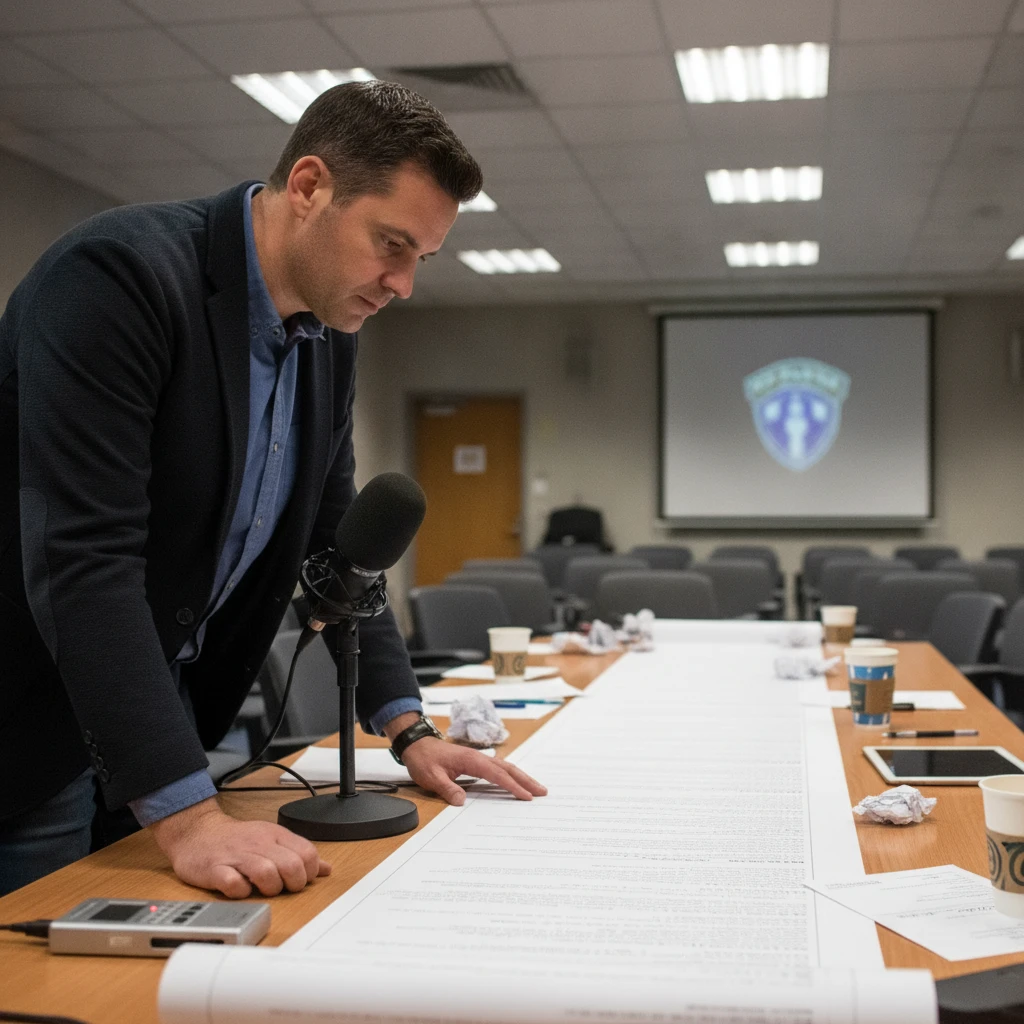
For transcript-based content, accuracy is non-negotiable. Quotes should reflect exactly what was said, including the natural rhythms of speech. Cleaning up grammar in a quote without disclosure misrepresents the subject — a basic violation of journalistic standards. The Society of Professional Journalists Code of Ethics provides a useful reference point on accuracy and attribution standards that every sports reporter should internalize early.
When selecting quotes for a story or transcript highlight, prioritize:
- Specificity over generality — a quote about a particular play beats a quote about "giving 110 percent"
- Emotion or personality — moments where the subject's voice comes through distinctly
- New information — anything that advances the story beyond what was already publicly known
Always preserve context. A quote pulled out of context can distort meaning significantly, and in sports media, that kind of misrepresentation spreads fast. If a quote only makes sense with surrounding context, include that context — even if it makes the excerpt longer.
Frequently Asked Questions
How long should a sports interview typically last?
Most post-game one-on-one interviews run between three and eight minutes. Formal sit-down feature interviews can extend to thirty minutes or more. Press conferences vary by sport and situation but typically run fifteen to thirty minutes with multiple reporters asking questions.
What is the difference between a one-on-one interview and a press conference?
A one-on-one interview gives you exclusive access to a single subject and allows for a more personal, in-depth conversation. A press conference is a shared media event where multiple reporters ask questions in sequence — less intimate, but often more newsworthy because statements made there carry official weight.
How do you get media access to interview professional athletes?
Media credentials are issued by team or league communications departments, typically to reporters working for established outlets. Building relationships with PR staff, covering teams consistently, and demonstrating professional conduct all contribute to sustained locker room and press conference access. Freelancers often access credentials through outlet affiliation.
Should you send questions in advance to an athlete or their PR team?
For long-form feature interviews, sending a general topic list (not specific questions) is common practice and often appreciated by PR staff. For press conferences and post-game scrums, pre-submitted questions are neither expected nor appropriate. Sending exact questions in advance for any format can result in overly polished, rehearsed answers that strip the interview of spontaneity.
How do you handle an athlete who gives only short, one-word answers?
Shift to open-ended questions that structurally can't be answered with yes or no. Ask them to walk you through something, describe what they were thinking, or explain a decision. If the subject remains closed off, accept it professionally — some interviews yield little, and pushing too hard damages future access more than it helps the current story.